
Curiosity or Action, What’s the Better Bias
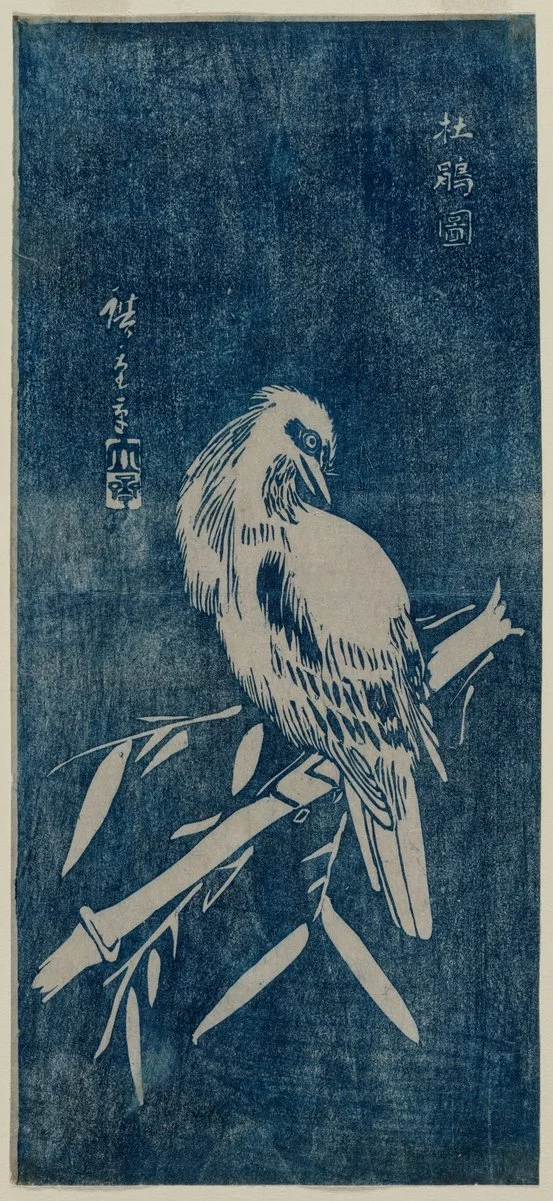
Cuckoo by Utagawa Hiroshige
The term “bias for action” describes one of many cognitive biases that can reduce the quality of our decisions, but is increasingly trumpeted as a laudable characteristic, especially in comparison to “analysis paralysis.” The thinking is:
We may not know exactly what to do, but doing something is better than doing nothing.
I suspect that, in this context, “better” refers to acting being: (1) More satisfying than waiting, and (2) Easier to show in justifying one’s value (existence?).
Leadership is largely about stories, which provide a means to make sense of our surroundings and, thus, shape our actions and inactions. Consider this historical anecdote: Three figures of Japanese history are credited with bringing peace to the tumultuous and bloody “Sengoku” period (from 1467 to 1615; literally “War Country”). The lives of Oda Nobunaga, Toyotomi Hideyoshi, and Ieyasu Tokugawa were interconnected and each contributed to the smoothing of tensions that saw Tokugawa rise to become the country’s first Shogun. This history forms the basis for James Clavell’s novel and both Paramount’s (1980) and FX’s (2024) TV series recreations.
These three are noted for their vastly different approaches, which are illustrated by an anecdote involving a cuckoo bird. The bird that was not sharing its charming music, and their reactions reveal a fundamental modus operandi:
Oda Nobunaga*: “A bird that doesn’t sing is of no use to me.” (Fundamental question: Why bother keeping it around?)
Toyotomi Hideyoshi: “I am sure that we can do something to get this bird to sing.” (Fundamental question: What can we do?)
Ieyasu Tokugawa: “Let’s wait a bit. The bird may start to sing on its own.” (Fundamental question: What actually makes this bird sing?)
*Known to be an impulsive and violent man, Oda Nobunaga likely killed the bird.
This particular chapter of history illustrates that bias for action may not be the strong leadership characteristic espoused by some. Ieyasu Tokugawa succeeded in amassing the power to unite warring clans in the very late years of the 16th century and maintained control until his death in 1616. That, plus being the central role of books and limited TV series, makes a compelling case for choosing a bias toward curiosity rather than action. The action-oriented curiosity exhibited by Oda Nobunaga and Toyotomi Hideyoshi takes the form of, “What should we do?” or “Why bother?” Both can be framed as important strategic decisions from a leader who is smart enough to figure it out OR brave enough to make the big decision to “kill” a historic stream of activity.
A deeper curiosity that ponders, “What is actually going on here?” can bring the discipline to not react immediately and take the necessary time to better formulate a working theory.
Give the bird 24 hours, and learn about any effects that sunlight may have;
Take a month, and see the connections to the lunar cycle; or
Hang tight for a season, and see how the external environment might shape activity.
If you have already been paying close attention for a day, a month or a quarter, maybe you have a working theory upon which to act. If you feel pressure to “do something” or “make a decision” because you think a bias for action is good, take a moment to observe the silent bird. You may learn something and you may even get treated to a beautiful song.